
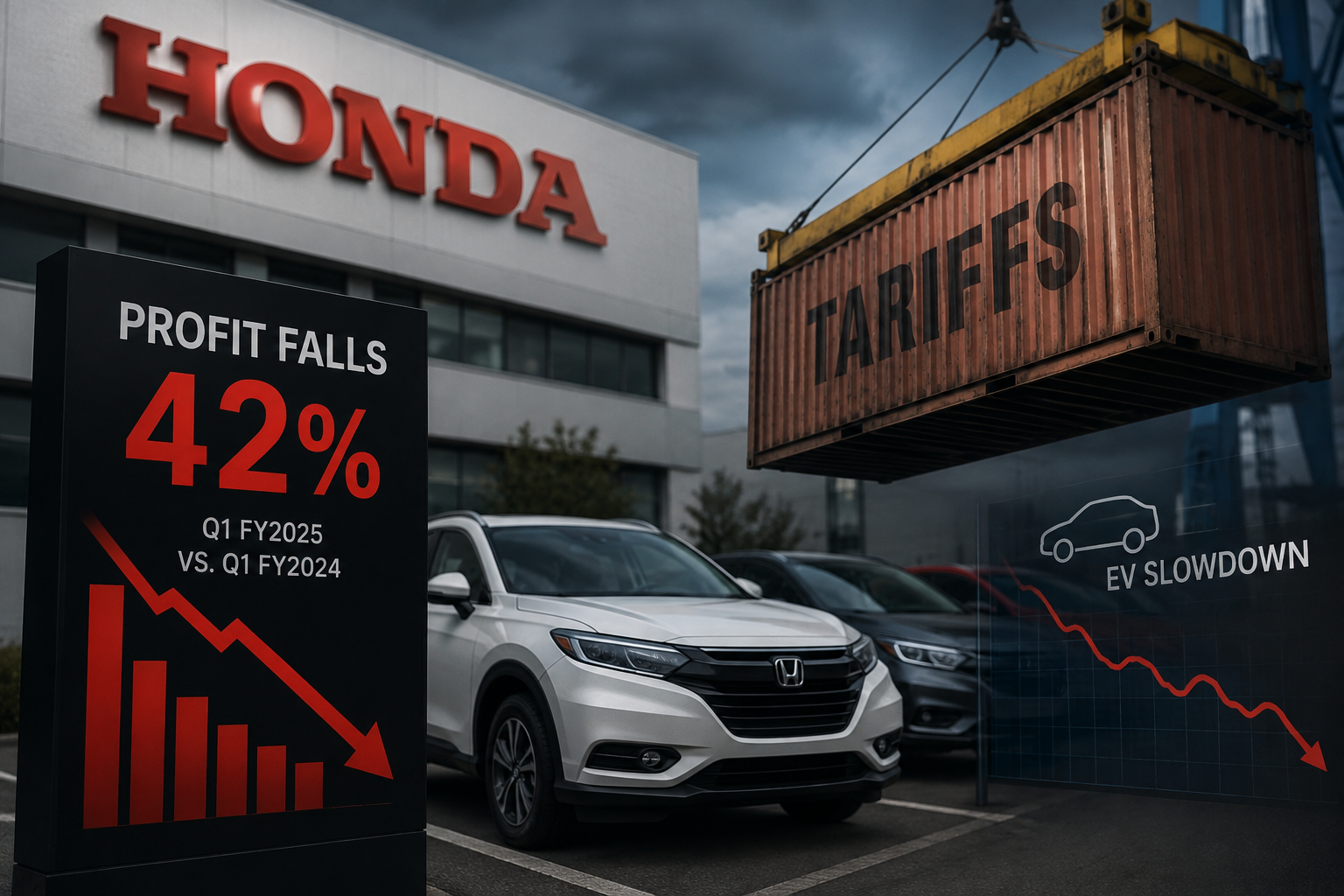
Honda Motor Co. reported a 42% drop in profit for the nine months through December, as U.S. tariffs and weaker electric vehicle (EV) demand in the American market pressured earnings.
The Japanese automaker posted profit of 465.4 billion yen ($3 billion), down from 805.2 billion yen a year earlier, marking the second consecutive year of declining profit for the period. Sales slipped 2.2% to 15.98 trillion yen ($102.6 billion).
Honda maintained its full-year profit forecast of 300 billion yen ($1.9 billion), despite ongoing challenges.
The company cited slowing EV demand in the United States as a key factor affecting results. It lowered its global EV sales target for 2030 to 20%, down from a previous goal of 30%, and confirmed it had canceled development of some EV models due to changing market conditions.
Meanwhile, Honda’s motorcycle division delivered relatively strong performance, helping to offset some of the weakness in its automotive business.
Trade policy has also weighed heavily on Japanese automakers. U.S. tariffs on automobiles and parts, reduced last year to 15% from an initially proposed 25%, continue to impact Japan’s export-driven car industry. The company said tariff-related costs remain a significant burden.
Despite the earnings decline, Honda shares rose 2.1% in Tuesday trading, in line with broader gains in Japan’s stock market.